-
Continue reading →: What Does It Mean to Make Language Visible? Part 2.
By Dr. Ruslana Westerlund *I use this reading to introduce teachers and instructional leaders to a different way of seeing language. If you want to use this reading in your professional learning, I can share my processing activities. Please request permission by contacting me at westerlundconsulting.com Earlier, I posted a…
-
Continue reading →: Is SFL Concerned with Automaticity?
This blog is in response to the comment I received on my LinkedIn post from a respected language colleague Arkady Z. He commented, “In language education, two powerful but fundamentally different paradigms often get discussed side by side: Systemic Functional Linguistics (SFL) and implicit fluency training. Although both aim to…
-
Continue reading →: What Does It Mean to Make Language Visible?
by Dr. Ruslana Westerlund I get these 3 questions a lot: Q: Why do you promote SFL and Genre Pedagogy? A: I promote equity. I chose SFL and Genre Pedagogy because they make the language of schooling visible and teachable. Too often, we expect students to read, write, reason, and…
-
 Continue reading →: All Blogs Are *NOW* FREEEE!
Dear subscribers who are mostly teachers! We know you work really hard and you are underpaid. Westerlund Consulting LLC is providing all the blogs moving forward for FREEEEEEE! That means – RETROACTIVELY too! Now you can access the following blogs, previously available only by subscription: Cheering you on, About the…
-
Continue reading →: Cross-Linguistic Meaning Making Through Noun Groups in Science
This week for Cohort 3 was Session 5 of our Building a Language Toolkit for Teachers: A Functional Approach book study, we explored one of the most exciting opportunities for supporting multilingual learners: cross-linguistic analysis. Rather than asking students to leave their home languages at the classroom door, we examined…
-
 Continue reading →: The Point of Departure: How Writers Guide Their Readers
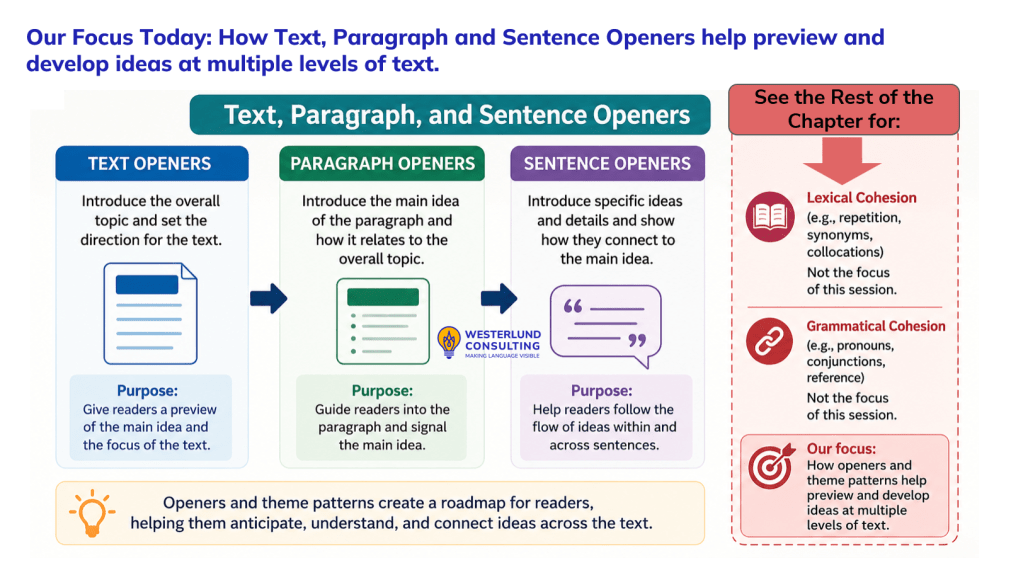
We are having so much fun in our summer book study unpacking key ideas from our book Building a Language Toolkit for Teachers: A Functional Approach. Sally Humphrey and I co-lead the sessions. To reflect on some of my favorite moments, I’ve been writing blogs. In Session 1, we talked…
-
Continue reading →: Kindergarten Lesson: Why Don’t Signs Use Full Sentences?
This lesson is in response to a conversation on LinkedIn about Text as a Unit of Meaning. The question came up about whether we should work with texts with students with lower levels of language proficiency to which I responded: we can do complex work with short texts. I actually…
-
 Continue reading →: “Showing” and “Telling” in Narratives Through WIDA Language Features
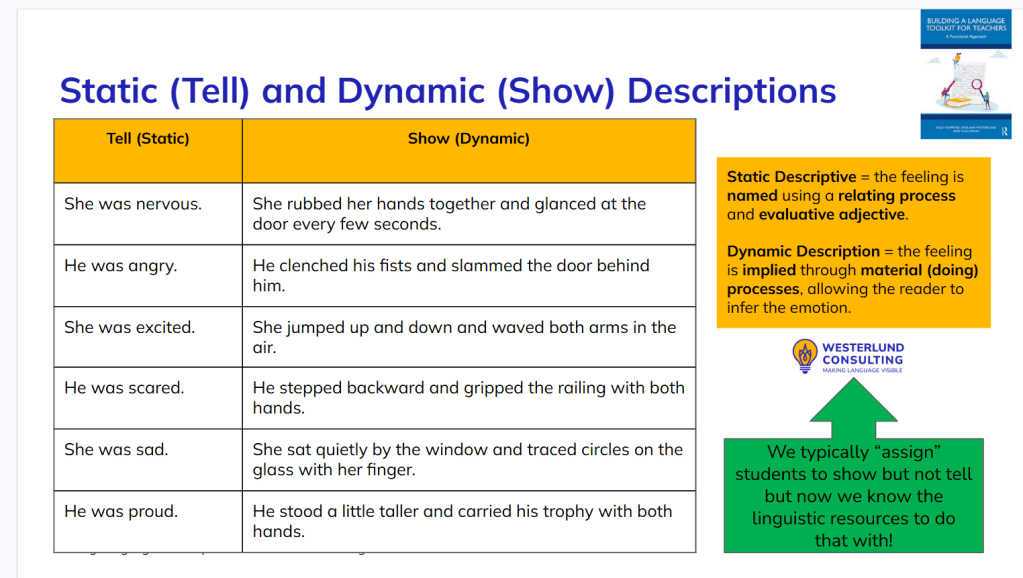
We are having a fantastic time in our summer book study. There are about 70 participants from 6 continents. I lost track of counting countries, it’s easier to count continents. Two theoretical chapters are out of the way – next week is the real fun begins. If you hurry, we…
-
 Continue reading →: Gamifying Alphabet Learning
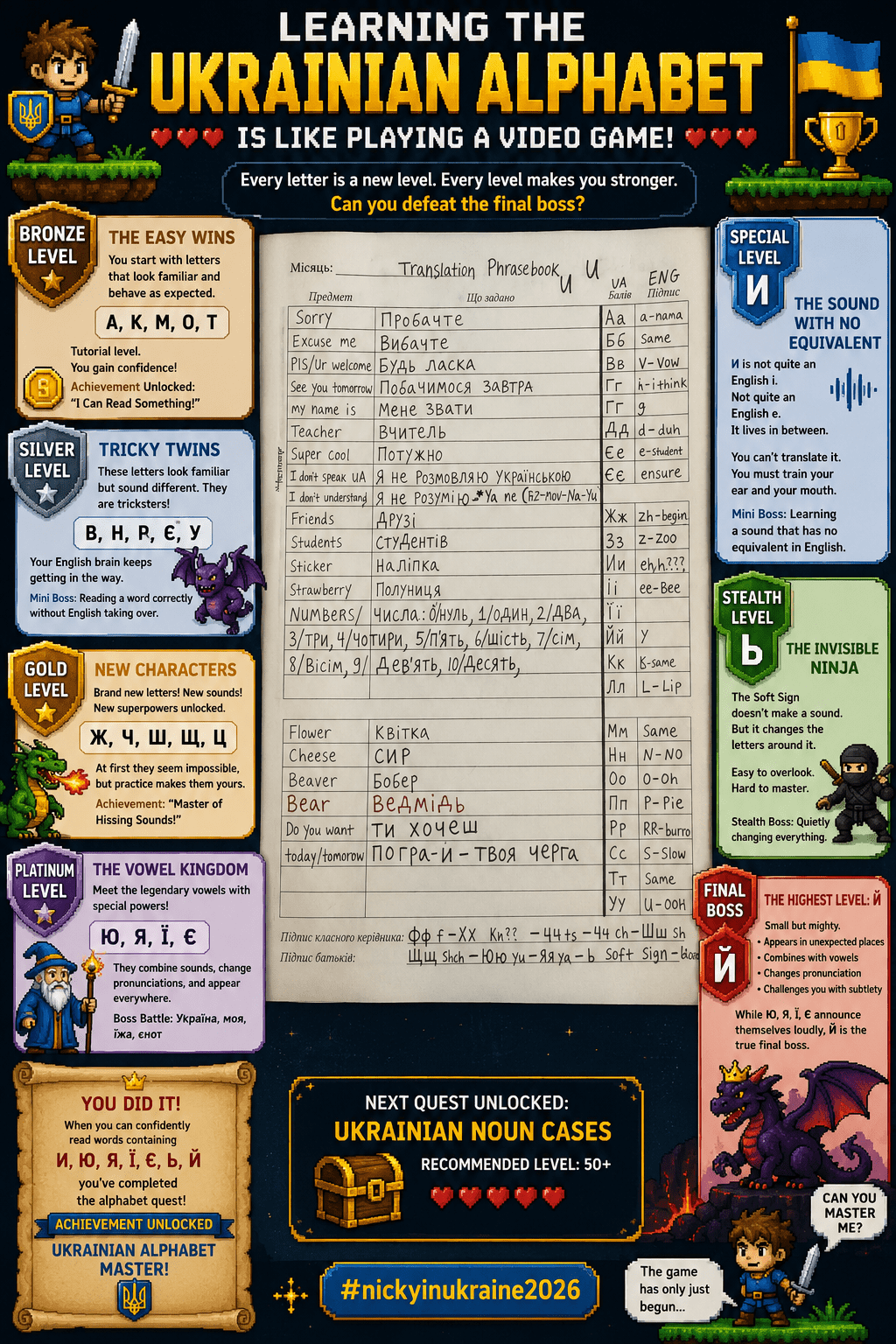
Alphabet Learning Doesn’t Have to Be Boring: Gamifying the Ukrainian Alphabet By Dr. Ruslana Westerlund I’ve been writing all about English in my blogs, and most of my work focused on the upper levels of the language system: Discourse and down. Well, today I’m changing things up a bit. I’m…
-
 Continue reading →: The Role of Language in Health and Physical Education
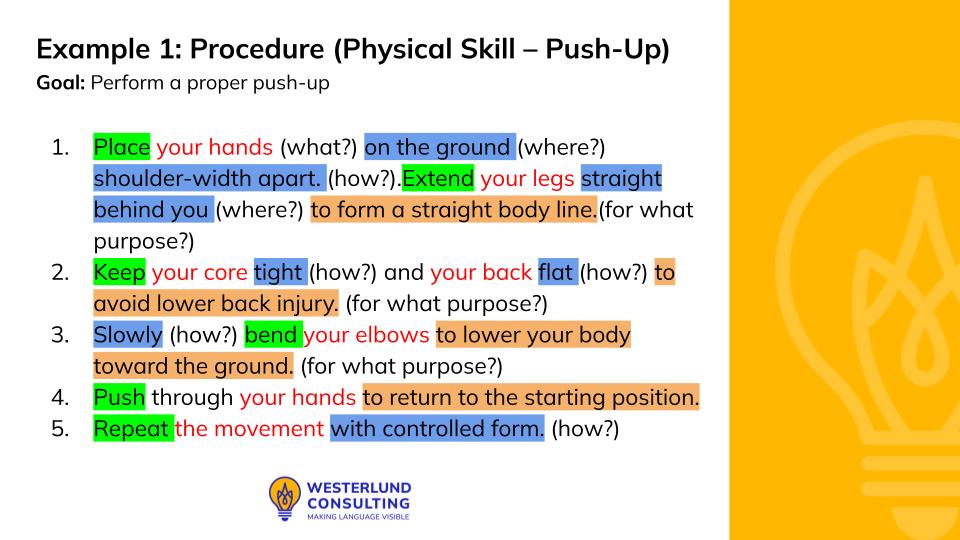
By Dr. Ruslana Westerlund I recently delivered training for instructional leaders from various learning areas – from environmental science to early years to math and science, and yes, health and physical education (HPE). (In the following weeks, I will be training social studies, literacy, art & music instructional leaders). Being…
Hello,
I’m Ruslana

Proud immigrant woman business owner of Making Language Visible @Westerlund Consulting. I consult internationally on all things related to equipping all teachers with a pedagogically useful model of language. Book me at westerlundconsulting.com
Let’s connect
Join the fun!
Stay updated with our latest tutorials and ideas by joining our newsletter.
 Making Language Visible